Sigrid Weigel
  |
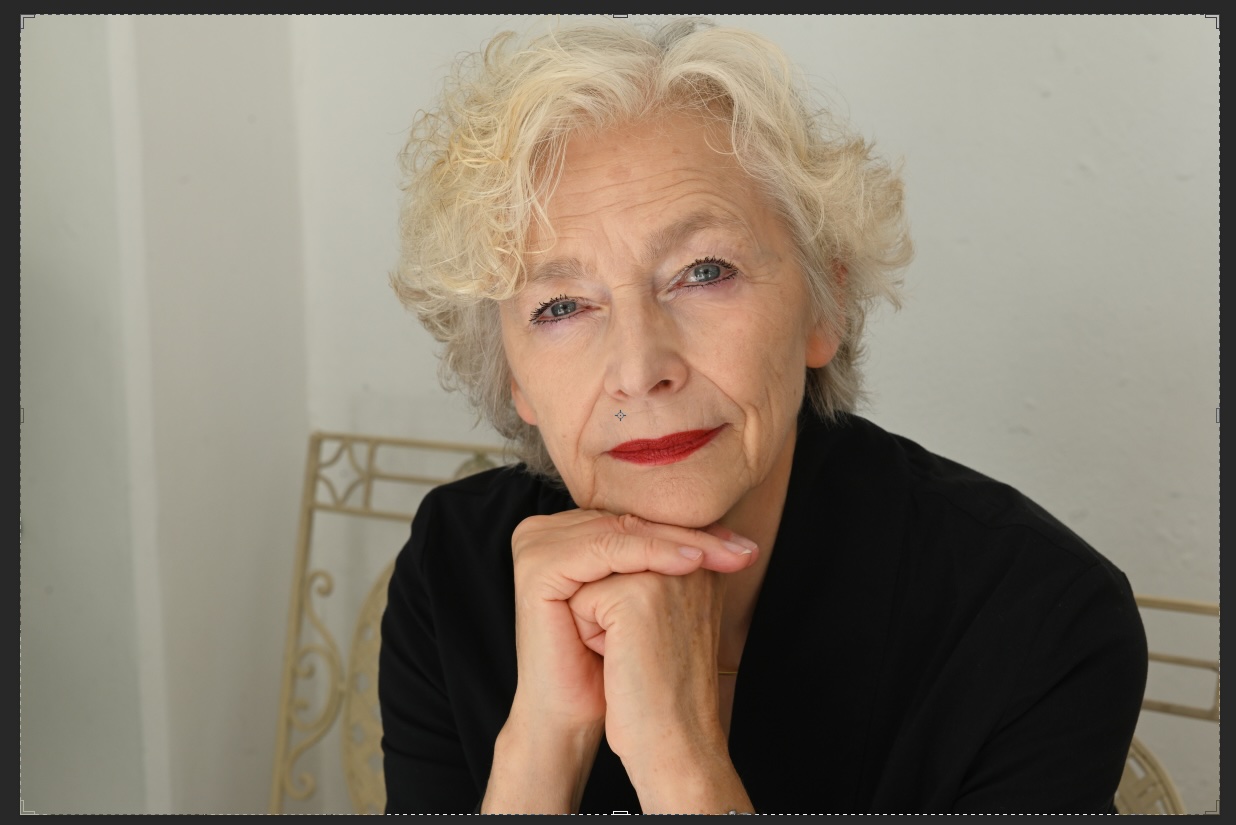
Sigrid Weigel is Emeritus Director and Senior Researcher at the Leibniz Research Center for Literature and Culture (ZfL) in Berlin, which she developed to a place of transdisciplinary research. She was professor at universities of Hamburg, Zurich, Princeton, and the TU Berlin and received honorary doctorates from the universities of Leuven, Basle, Tbilisi, and UNSAM Buenos Aires.
Coming from literary theory and history she opened the field to Kulturwissenschaft/cultural science and developed a cultural scientific approach to the history of ideas. Her research has focused on gender and literature, memory policy in post-war Germany, psychoanalysis, image theory, genealogy/generation, facial expression, empathy. She is a specialist of Walter Benjamin, Aby Warburg, Hannah Arendt and has edited works of Warburg, Gershom Scholem, Susan Taubes, and Stephane Mosès.
After her resignment from the directorship of the ZfL she engaged also beyond the academic field (e.g. with an exhibition on the human face and a study of transnational foreign policy for the ministry of foreign affairs). Her most recent work focuses on the Kulturwissenschaft around 1900, the cultural history of compassion, and opera.
Sigrid Weigel joins the Paris IAS in October 2026 for a one-month writing residency.
Research topics
Cultural science (esp. Benjamin, Warburg, Freud); compassion/empathy; image theory; opera.
The First Kulturwissenschaft (cultural science). Topicality and Epistemological Potential of an Intellectual Movement around 1900
The project focuses on Kulturwissenschaft (Cultural Science) around 1900: a fascinating constellation of intellectual history developed by scholars such as Warburg, Benjamin, Freud, Simmel, Plessner, Mannheim et al. who mainly came from a German-speaking secularized Jewish milieu. Without forming a homogeneous group, their contributions exhibit related commitments: the transgression of their original discipline, the concern with border areas and boundary cases between disciplines and cultures, the focus on socio-cultural, symbolic, and material practices, and a critical theory of modernity in contrast to the dominant concept of progress and secularization.
Several of these authors referred to certain concepts of the natural sciences or mathematics (e.g. Warburg, Cassirer, Scholem) or worked at the threshold of the so-called two cultures (e.g. Freud, Plessner). They invented thought-figures of time and space beyond narratives of chronology and geography. Many of them shared an interest in the pagan or polytheistic heritage of European antiquity, in non-European cultures, and the afterlife (Nachleben) and transformation of mythical, religious and cultic practices in modern times.
Emerging from the reverse side of the nationalist, colonial European culture, their works provide fruitful challenges for the current cultural-theoretical and -political debate with its irreconcilable convictions. Their scholarship anticipated several issues of the present anti/post-colonial critique, yet, without constructing a binary world view or attributing different cultural practices to ethnicity, gender, or race.
Key publications
Sigrid Weigel, Grammatology of Images. A History of the A-visible. Fordham University Press, 2022
DOI: 10.5422/fordham/9781531500153.001.0001
Sigrid Weigel, Walter Benjamin, Images, the Creaturely, and the Holy, Stanford University Press, 2013
Learn more
Sigrid Weigel, Genea-Logik. Generation, Tradition und Evolution zwischen Kultur- und Naturwissenschaften München: Fink, 2006
DOI: 10.37307/j.1868-7806.2007.04.16
 Online conference by Sigrid Weigel, Emeritus Director and Senior Researcher of the Leibniz Research Center for Literature and Culture, and fellow for a one-month writing residency, as part of the "Paris IdeAS" series. Open to the public under registration |
|
|
|
|