Wing Thye Woo
  |
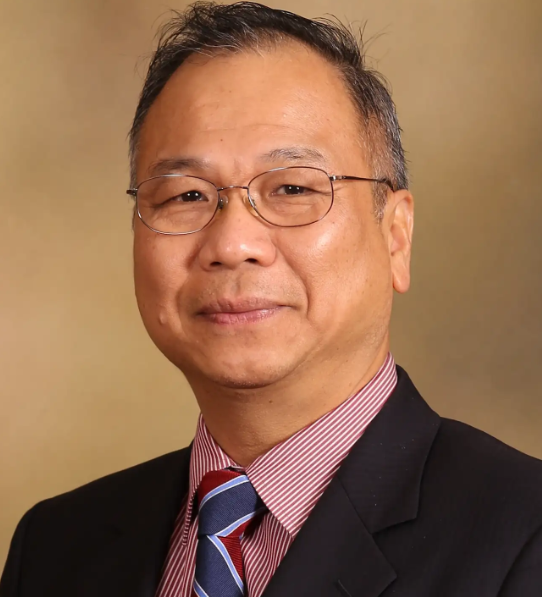
Wing Thye Woo is Distinguished Professor Emeritus at University of California Davis; University Chair Professor at Liaoning University and Visiting Professor at the University of Hong Kong and University of Malaya. Wing Thye Woo is an expert on the East Asian economies, particularly, China, Indonesia, and Malaysia. His current research is on design of efficient, equitable pathways to achieving the Sustainable Development Goals with projects on Green Finance, Middle Income Trap, Decarbonization Pathways in Southeast Asia, and Global Economic Architecture for the Multi-Polar World.
Wing Thye Woo worked as a consultant for China's Ministry of Finance in 1992-1993 on the tax and exchange rate reforms that were implemented on January 1, 1994 (Fiscal Management and Economic Reform in the People's Republic of China, Oxford University Press, 1995). In the 1994-1996 period, he led an international team, which included Leszek Balcerowicz, Boris Fyodorov, Fan Gang and Jeffrey Sachs to study the reform experiences of centrally planned economies (Economies in Transition: Comparing Asia and Europe, MIT Press, 1997). From 1997 to 1998, he was a special advisor to the U.S. Treasury on East Asian economies (The Asian Financial Crisis: Lessons for a Resilient Asia, MIT Press, 2000). He was a coordinator of the ADB Institute project, Financing Green Development, 2017-2019, and the outcome is Handbook of Green Finance: Energy Security and Sustainable Development, Tokyo: Springer, 2019.
The University of California Davis awarded him its Distinguished Scholarly Public Service Award in 2004 and appointed him Distinguished Professor in 2019; the Governor of Penang conferred on him the title Dato in 2009; and the University of Cambodia awarded him an Honorary Doctorate in Sustainable Development in 2020.
Wing Thye Woo joins the Paris IAS for a one-month writing residency in September 2026.
Research topics
Green Finance, Middle Income Trap, Decarbonization Pathways in Southeast Asia, and Global Economic Architecture for the Multi-Polar World
What Useful Roles Can Middle Powers Play Amidst Intensification of US-China Conflict?
China’s GDP began exceeding US GDP from 2016 onward. The present bipolar world will, however, not revert to a unipolar world even after China’s GDP has become more than three times bigger than US GDP upon the convergence of their GDP per capita. The 21st Century will instead be a multipolar world because India is moving quickly to the center of the global stage. This end of the unipolar world at the end of the 20th Century has activated three threats to the world: the Thucydides Trap, the Kindleberger Trap and the Tragedy of the Global Commons.
The Thucydides Trap refers to the bloody but futile attempt by the original hegemon to prevent the rise of the new power. In this age of thermonuclear weapons, the idea of beating the other big power is just wrongheaded. The stark political choices in the 21st Century are peaceful co-existence or mutual annihilation of the great powers and bystanders.
The second consequence from successful economic catching-up is the activation of the Kindleberger Trap. Charles Kindleberger has attributed the extreme severity of the Great Depression to (a) the exiting hegemon (United Kingdom) no longer had the economic weight to stabilize the global economy unilaterally; and (b) the new hegemon (United States) being not yet able (or willing) to take over the responsibilities of stabilizing the global economy. The stark economic choices in the 21st Century are economic policy cooperation among the big powers for systemic stability and common prosperity or noncooperative individual optimization that might produce a zero-sum outcome at best.
The third unexpected consequence from the large rise in prosperity internationally is the triggering of the Tragedy of the Global Commons by the over-pollution and over-exploitation of the natural world. The existential threat is that if these breaches of the planetary boundaries are severe enough, the natural systems of the Earth would go past their tipping points whereby climate change and the extinction of species cannot be reversed when humans finally start reducing the amount of atmospheric CO2 and begin rehabilitating the defoliated environment. The point is that rich countries have to help fund the investments needed for the timely green transformation in the poor countries.
The Thucydides Trap and Kindleberger Trap have manifested themselves in the shredding of NATO, breakdown of the WTO multilateral free trade system, and reduction in the supply of global public goods (exemplified by US withdrawal from the World Health Organization and the Paris Climate Treaty). And successful economic catching up around the world have worsened the Tragedy of the Global Commons.
The middle-power countries of the world are suffering collateral damage from Cold War 2.0 created by the national security strategies of USA, China, and Russia, and by successful economic convergence. I would like to spend a month in the Paris Institute of Advanced Studies to explore what the middle powers could do to address the three threats created by successful economic catching up in China and other economies.
Key publications
Wing Thye Woo, Jeffrey Sachs, Naoyuki Yoshino, Farhad Taghizadeh-Hesary, Handbook of Green Finance: Energy Security and Sustainable Development, Tokyo: Springer, 2019
DOI: 10.1007/978-981-10-8710-3
Wing Thye Woo, Jeffrey Sachs et Klaus Schwab, The Asian Financial Crisis: Lessons for a Resilient Asia, MIT Press, 2000
Wing Thye Woo, Stephen Parker et Jeffrey Sachs, Economies in Transition: Comparing Asia and Europe, MIT Press, 1997
Wing Thye Woo, Christine P. W, Wong Christopher Heady, Fiscal Management and Economic Reform in the People’s Republic of China. Hong Kong: Oxford University Press (for the Asian Development Bank), xvi, 271 pp, 1995
DOI: 10.2307/2659053
 Online conference by Wing Thye Woo, Distinguished Professor Emeritus at the University of California, Davis, fellow for a one-month writing residency at the Paris IAS in September 2026, as part of the "Paris IdeAS" series. Open to the public. |
|
|
|
|