Hannah Landecker
  |
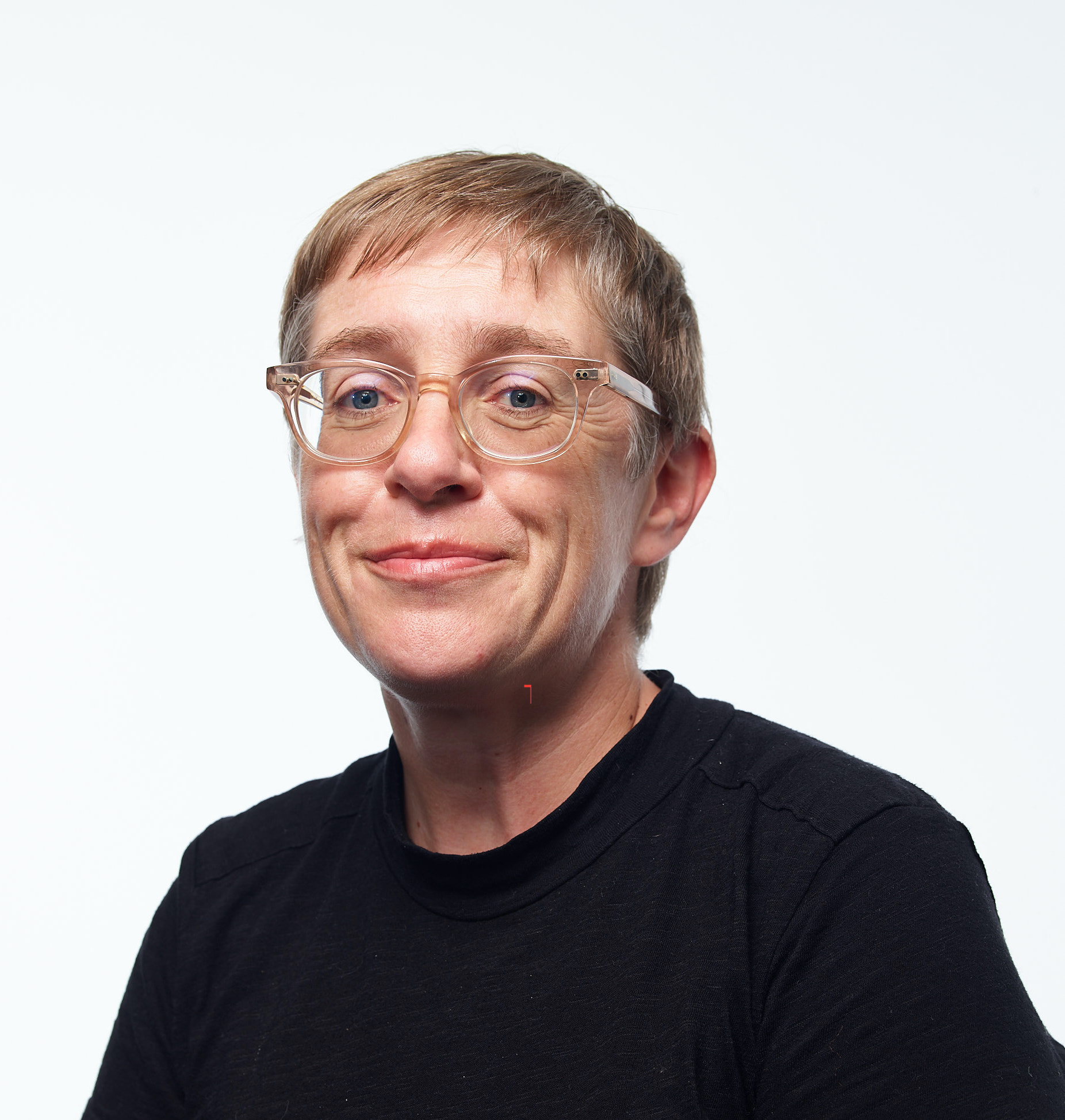
Hannah Landecker holds a joint appointment in the Life and Social Sciences at the University of California Los Angeles. She is a professor in the Institute for Society and Genetics, and the Department of Sociology, also serving as the Associate Dean for Undergraduate Education in the Life Sciences and co-director of the UCLA Center for Reproductive Science, Health and Education.
A historian and sociologist of the modern biosciences, Hannah Landecker’s research has focused on transformations to concepts of life in laboratory practices such as tissue culture and microcinematography. Interested in how anthropogenic activity has changed the biological world that scientists study today, she has published widely on sociohistorical drivers of antimicrobial resistance, and the rise of epigenetics and inflammation as explanatory frameworks for health in industrialized settings. Her recent focus has been the role of metabolism both as a form of knowledge and as a site of industrial activity, in which biotechnological harnessing of metabolic agents such as enzymes and antioxidants has transformed the speed and scale at which matter and energy move through modern societies.
Hannah Landecker joins the Paris IAS in September 2026 for a one-month writing residency.
Research topics
History of Biotechnology; History of Mass Production in Food Systems; History and Sociology of Antimicrobial Resistance.
What is a Metabolic History?
This project is about the history of metabolism as a scientific concept and as a target of technological intervention in agriculture, antibiotic production, and food systems. In the 20th century, intervention took the form of harvesting enzymes from organisms and resetting their catalytic power in factory production; disaggregation of fats into glycerin and fatty acids for recompiling into disinfectants and emulsifiers for sanitizing and managing the flow of mass produced goods; and harnessing of the reductive power of antioxidants and the antibiotic power of microbial metabolites, among other examples.
Despite the thoroughgoing transformation of the material world rendered by this wielding of metabolic power, and the profound consequences it has had for health and environmental crises of the 21st century, the history of metabolism is under-studied, particularly in comparison to the volume of work on heredity, evolution, and genetics. These developments generated global biological change that gave rise to new biomedical problems of antimicrobial resistance and metabolic disorder whose urgency in turn transforms metabolic science. The history of metabolism therefore cannot be told as a series of changes in ideas but instead poses the interesting historiographical challenge of an iterative structure in which knowledge changes its own object and scientists turn from the study of the biology of nature to the study of anthropogenic biology, of nature after industrialization.
Key publications
Landecker, Hannah. “Life as Aftermath: Social Theory for an Age of Anthropogenic Biology", Science, Technology & Human Values 50(4):679-712, 2025
DOI: 10.1177/01622439241233946
Landecker, Hannah. “How the Social Gets Under the Skin: From the Social as Signal to Society as a Metabolic Milieu”, Kölner Zeitschrift für Soziologie und Sozialpsychologie (KZfSS) 76:745-767, 2024
DOI: 10.1007/s11577-024-00951-5
Landecker, Hannah. “The Food of our Food: Medicated Feed and the Industrialization of Metabolism,” 56-85 in H. Paxson, ed., Eating Beside Ourselves: Thresholds of Food and Bodies, Duke University Press, 2023
DOI: 10.1215/9781478024064-003
 Online conference by Hannah Landecker, Professor at the University of California Los Angeles, and fellow for a one-month writing residency in September 2026 at the Paris IAS, as part of the "Paris IdeAS" series. Open to the public. |
|
|
|
|