Li Xiong
  |
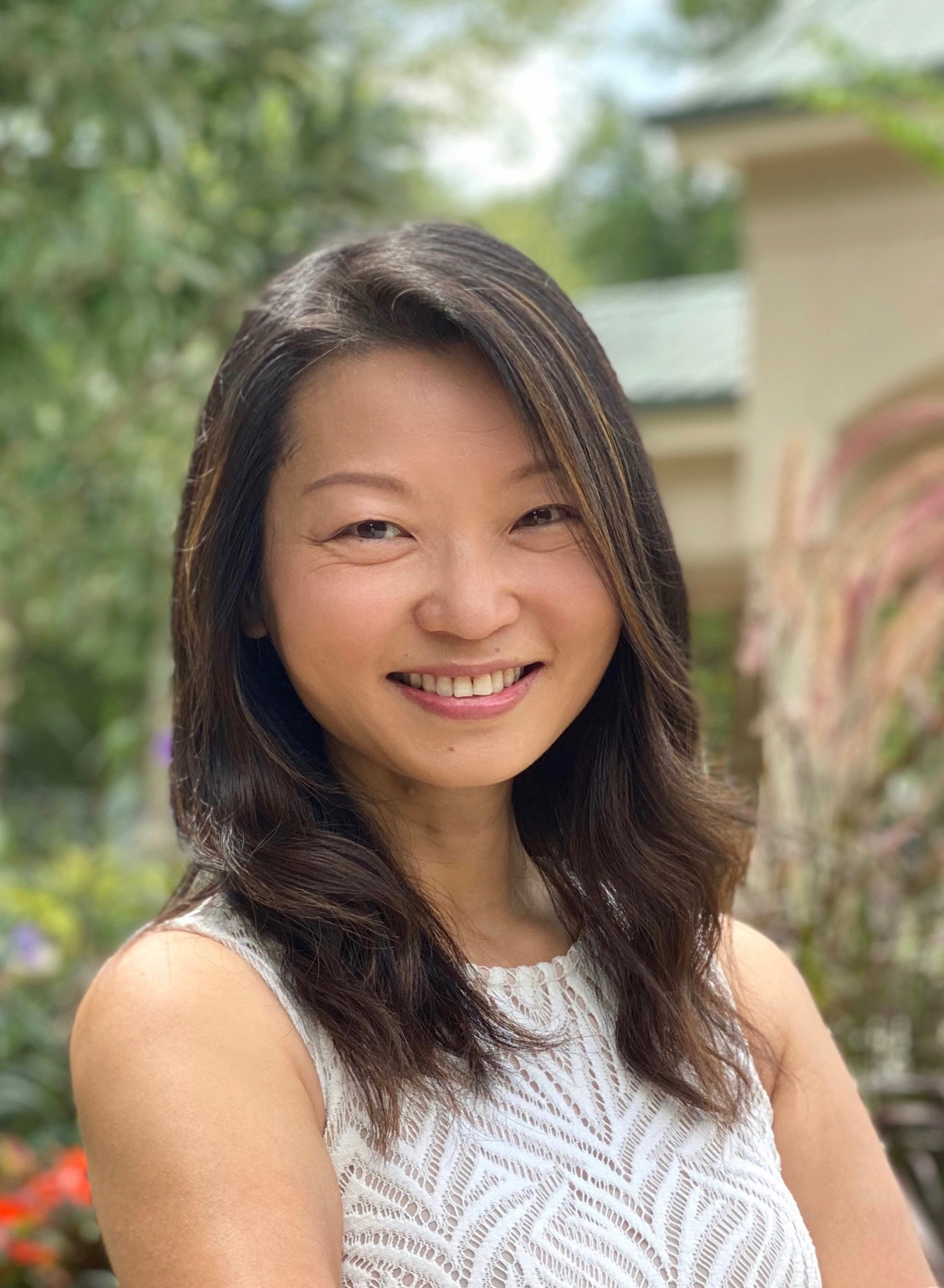
Li Xiong is the Samuel Candler Dobbs Professor of Computer Science and Professor of Biomedical Informatics at Emory University, where she directs the Assured Information Management and Sharing (AIMS) Lab. Her research focuses on trustworthy and privacy-enhancing AI, with applications in healthcare, public health, and spatial intelligence. She is an ACM, IEEE, and AAAS Fellow, recognized for her contributions to privacy-preserving and secure data analytics. Her research has been supported by major U.S. government agencies and global industry partners, including Google, IBM, Cisco, AT&T, and Mitsubishi.
Li Xiong joins the Paris IAS in September 2026 for two-months stay as part of the "Distinguished Fellowship program" developed in collaboration with PostGenAI@Paris cluster led by Sorbonne University. Based in the heart of Paris, this interdisciplinary and cross-sector consortium aims to promote ethical, inclusive and sovereign AI that is fully rooted in the major challenges of our time.
The Paris IAS welcomes international researchers to support them in their research on artificial intelligence, its consequences for our societies and the prospects it offers for the future.
Research topics
Trustworthy ; Privacy-enhancing AI and Data Management.
MEMOIR (Memory, Erasure, Mediation, and Ownership in AI Representations)
Large AI models such as ChatGPT are becoming new gateways to human knowledge. They are trained on vast collections of human-generated data, including books, websites, articles, images, and other records of social and cultural life. In doing so, they compress parts of our collective experience into computational representations that shape what appears visible, authoritative, or forgotten. This project examines these models as emerging forms of collective memory.
The project asks how AI systems “remember” information, how they “forget” it, and who has the power to decide what should be retained, removed, or emphasized. It focuses especially on the role of privacy technologies and governance mechanisms. Tools such as data filtering, differential privacy, machine unlearning, and model editing are designed to protect individuals and reduce harm, but they can also reshape what a model learns and what future users are able to access.
The central question is how to balance privacy, fidelity, and fairness. Strong privacy protections may reduce exposure of sensitive personal data, but they may also distort or erase information about smaller communities, rare events, or marginalized groups. On the other hand, high-fidelity models may preserve more detail but risk reproducing private, harmful, or biased information. By connecting technical developments in AI privacy with broader questions about memory, power, and representation, this project aims to offer a framework for understanding how AI systems are changing the way societies preserve and access knowledge.
Key publications
Hong Kyu Lee, Ruixuan Liu, Li Xiong. Direct Token Optimization: A Self-Contained Approach to Large Language Model Unlearning. ACL Findings, 2026
DOI: 10.48550/arXiv.2510.00125
Ruixuan Liu, David Evans, Li Xiong. Beyond Indistinguishability: Measuring Extraction Risk in LLM APIs. IEEE Security & Privacy, 2026
DOI: 10.48550/arXiv.2604.18697
Ruixuan Liu, Toan Tran, Tianhao Wang, Hongsheng Hu, Shuo Wang, Li Xiong. ExpShield: Safeguarding Web Text from Unauthorized Crawling and Language Modeling Exploitation. NDSS, 2026
DOI:10.14722/ndss.2026.240011
 Online conference by Li Xiong, Professor at Emory University and fellow for a two-months writing residency at the Paris IAS in September 2026, as part of the "Paris IdeAS" series. Open to the public. |
|
|
|
|