Scott Frickel
  |
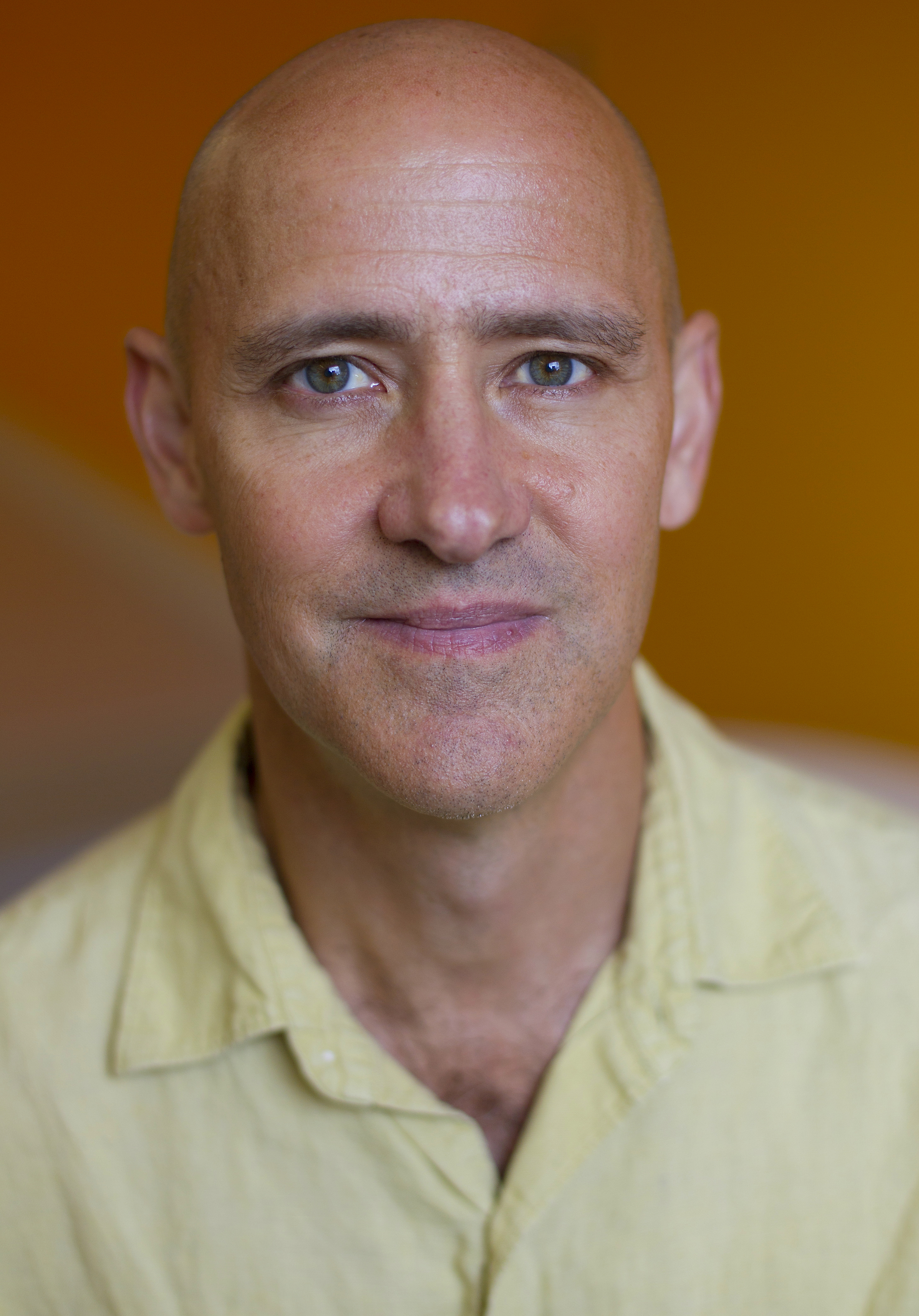
Scott Frickel is Chair and Professor of Sociology and Core Faculty Fellow at the Institute for the Study of Environment and Society at Brown University. His research and teaching interests center on the intersections of nature, knowledge, and politics. A growing feature of his research involves developing new approaches for identifying and measuring epistemic and socio-environmental change and developing theories to explain those patterns.
Scott Frickel is the author of five books, mostly recently with Kelly Moore, Science and Inequality: A Political Sociology (Polity, 2025) and is currently co-editing the Handbook of Pollution and Society for E. Elgar. He is founding editor of the Nature, Society and Culture book series published by Rutgers University Press. He has held visiting faculty fellowships at Université Paris Dauphine-PSL and Technische Universität München.
Scott Frickel joins the Paris IAS in June 2027 for a one-month writing residency.
Research topics
Socio-ecological processes; Knowledge/Ignorance; Social Movements; Social Theory; Risk and Disaster; Urbanization.
Ground Truth: A Historical Sociology of Late Industrial Soil
This project combines traditional qualitative research methods with newer computational techniques reconstruct a history of soil contamination science and policy, and its relationship to broader socio-ecological processes in Rhode Island since the 1960s.
The study is anchored in a close analysis of site investigation reports managed by the Rhode Island Department of Environmental Management (RIDEM), which reveal agency scientists’ evolving interactions, over decades, with a revolving set of public and private actors. These include lawyers and engineers, toxicologists and chemists, realtors, planners, and officials from various state, federal and municipal agencies. Their individual and collective decisions (and non-decisions) generate shared understandings of soil contamination that are described in each report and guide subsequent actions (and inactions) lubricating Rhode Island’s economic development and consequent social and environmental disparities.
This study unpacks the inter-organizational entanglements and quasi-public settings in which regulatory knowledge is produced and implemented, not in abstract regulations, statistics and reports in Washington, D.C., but locally and literally on the ground in neighborhoods and communities across the state. It promises to reveal how ostensibly public, but largely hidden, epistemic and organizational processes unfolding in law firms, private testing laboratories, planning offices, and real estate markets inscribe the science and policy of soil contamination onto urban landscapes, invisibly structuring the entwined social geographies of environmental injustice and environmental privilege.
Key publications
Frickel, Scott and Kelly Moore, Science and Inequality: A Political Sociology, London: Polity Press, 2025
Boudia, Soraya, Angela Creager, Scott Frickel, Emmanuel Henry, Nathalie Jas, Jody Roberts, and Carsten Reinhardt, Residues: Thinking through Chemical Environments. New Brunswick, NJ: Rutgers University Press, 2022
Frickel, Scott and James R. Elliott, Sites Unseen: Uncovering Hidden Hazards in American Cities. ASA Rose Series in Sociology. New York: Russell Sage Foundation, 2018
|
|
|
|
|
|