Cyrus Shahabi
  |
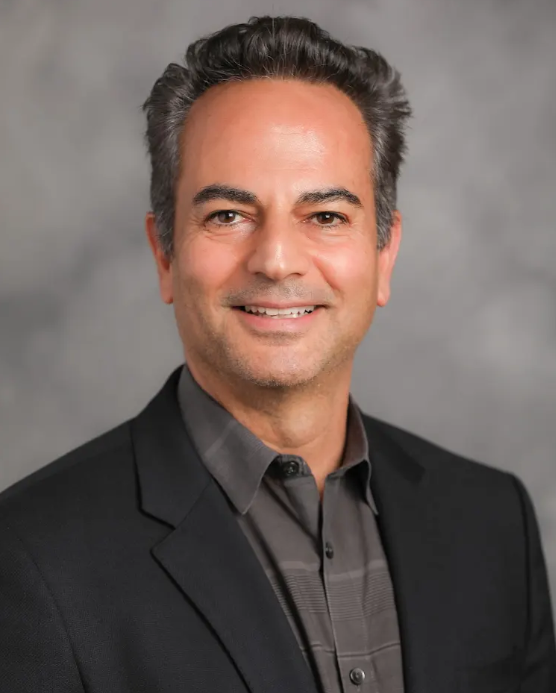
Cyrus Shahabi is a Professor of Computer Science, Electrical & Computer Engineering, and Spatial Sciences at the University of Southern California (USC). He holds Helen N. and Emmett H. Jones Professor of Engineering; and he sis the director of the Integrated Media Systems Center (IMSC) at USC. He was also the chair of the Thomas Lord Department of Computer Science at USC from 2017 to 2022.
He was the co-founder of two USC spin-offs, Geosemble Technologies and Tallygo. He authored two books and more than three hundred research papers in databases, GIS, and multimedia, with 14 US Patents.
Cyrus Shahabi chaired the founding nomination committee of ACM SIGSPATIAL for its first term (2008-2011 term) and served as chair of ACM SIGSPATIAL for the 2017-2020 term. He was an Associate Editor of IEEE Transactions on Parallel and Distributed Systems, IEEE Transactions on Knowledge and Data Engineering, and VLDB Journal. He was Editor in Chief of PVLDB Vol. 17 (PC Chair of VLDB 2024) and on the editorial board of the ACM Transactions on Spatial Algorithms and Systems and ACM Computers in Entertainment.
He is the General Chair of the ACM SIGMOD 2027 conference.
Finally, Cyrus Shahabi is a recipient of the ACM Distinguished Scientist award, the U.S. Presidential Early Career Awards for Scientists and Engineers (PECASE), and the NSF CAREER award. He is a fellow of the National Academy of Inventors (NAI) and IEEE.
Cyrus Shahabi joins the Paris IAS in October 2026 for a one-month writing residency.
Research topics
Artificial Intelligence; Spatial and Mobility AI.
From Patterns of Life to Traces of Meaning -- On Mobility, Meaning, and Spatial AI
This research project examines how digital mobility data and artificial intelligence can reveal “patterns of life”: the routines, places, movements, and social interactions that shape everyday human experience. Such patterns can offer new ways to understand how people work, socialize, rest, provide care, build community, and respond to change. The project considers how large-scale, longitudinal mobility data can complement traditional social research by making these patterns visible over time, while recognizing that data never provide a complete or neutral representation of lived experience. It explores both the opportunities and the risks created by these new forms of observation, including their potential to support health and well-being, as well as concerns about privacy, consent, surveillance, bias, and unequal visibility.
Drawing on advances in spatial AI and spatiotemporal data analysis, the project connects technical developments with broader questions about sociality, agency, care, and responsibility.
It develops the Interpretive Framework for Patterns of Life (INTER-PoL), a framework for studying patterns of life in ways that emphasize temporality, social and cultural context, disruption, and relational interpretation, while foregrounding human meaning and ethical responsibility and encouraging interpretive restraint when drawing conclusions from data. The goal is to enable understanding of life without losing sight of people and contexts behind the data.
Key publications
M. D. Siampou, S. Choudhury, S. L. Hsu, N. Arora, and C. Shahabi, "Mobility-Embedded POIs: Learning What a Place Is and How It's Used from Human Movement". Forty-third International Conference on Machine Learning (ICML), Seoul, South Korea, July 2026.
C. Chu and C. Shahabi, "Geo2Vec: Shape- and Distance-Aware Neural Representation of Geospatial Entities". The 40th Annual AAAI Conference on Artificial Intelligence (AAAI), Singapore, January 2026
C. Chu, C. Shahabi, E. Tung, and K. Shafique, "One Model, Many Cities: A Transferable Social Relationship Inference Framework for Human Mobility Data", Proceedings of the 33rd ACM International Conference on Advances in Geographic Information Systems (SIGSPATIAL), Minneapolis, Minnesota, November 2025
 Online conference by Cyrus Shahabi, Professor at the University of Southern California (USC), and fellow for a one-month writing residency at the Paris IAS in October 2026, as part of the "Paris IdeAS" series. Open to the public under registration. |
|
|
|
|