Enrico Ille
  |
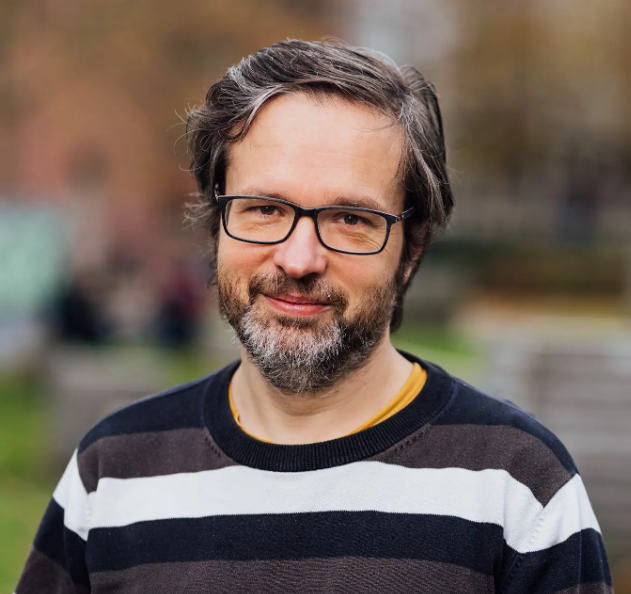
Enrico Ille is a habilitation candidate at the Faculty of History, Art and Area Studies at Leipzig University. His research is in the field of political ecology with a focus on resourcification, specifically the process by which minerals and plants are made into resources for human use.
Concomitantly, he is interested in the implications of researchers' varying distance to what they study for subsequent knowledge production. He has conducted long-term research in and about Sudan (since 2005), on diverse issues such as post-war development projects in rural areas, the historical shifts in human-date palm relations, the proliferation of gold-mining activities, and urbanisation.
More recently, he also engaged in an interdisciplinary research group (Plants and Politics), which studies the situation of plants in conflict-rich areas, such as northern Nigeria.
Enrico Ille joins the Paris IAS in March 2027 for a one-month writing residency.
Research topics
History and current state of the relationship between humans and plants; history and current state of the relationship between humans and minerals; methodological implications of distance in research; Sudan, Nigeria, and their respective contexts.
What is a "useful" plant?
This work explores histories of plant ‘usefulness’, focusing on the Sahel and Sudan savanna. In a challenging environment, some species garnered more attention than others, especially where imposed crop preferences altered landscapes.
This reflects common themes of socio-environmental history, including ecological consequences of commercially driven dominance of specific plants or even particular genetic versions of them, as edible plants shape divisions of labour and distinct food cultures. Broader transformations become visible as well: multi-purpose materials illuminate changes in material culture, from construction to nanotechnology, and the fate of plants registers dramatic ecological shifts and human responses to them, such as regreening and cultivating drought-resistant species.
Creative, aesthetic, and emotional connections to plants extend beyond utilitarian views, even during scarcity, inviting not just to contemplate other meanings of ‘useful’ but also the virtues of non-use. Plant sense-making has been rich and ever-sprouting, linking beauty, bodily forms, anthropomorphic resemblances, and moral ideas rooted in religious and philosophical thought.
Alongside botanical taxonomy and its imperial and commercial ties, this reveals a richer layer of knowing-through-plants, if not dismissed as ethnobotany or folklore. It opens avenues for exploring plants across linguistic contexts: languaging as reservoir of social history links semantic domains around plants to the ideas and practices they inhabit.
Key publications
Ille, Enrico and Mohamed Salah, "Walking on fire: perambulatory fieldwork and shared interpretation of date palm fires north of the Third Cataract of the Nile", Material & Fieldwork in African Studies 5, 91-168, i-lxxi.2022
DOI: https://doi.org/10.4000/11tb0.
Chevrillon-Guibert, Raphaëlle, Enrico Ille and Mohamed Salah. "Power practices, mining conflicts and the gold economy in the Sudan under the Al-Inqaz regime". Politique Africaine 2020/2 (158), 123-148, 2020
DOI: https://doi.org/10.3917/polaf.158.0123.
Ille, Enrico, "Literacy, translation, practices: Groundwater location under stress in South Kordofan", Journal des Anthropologues 132-133, 219-242, 2013
|
|
|
|
|
|