Sabina Faiz Rashid
  |
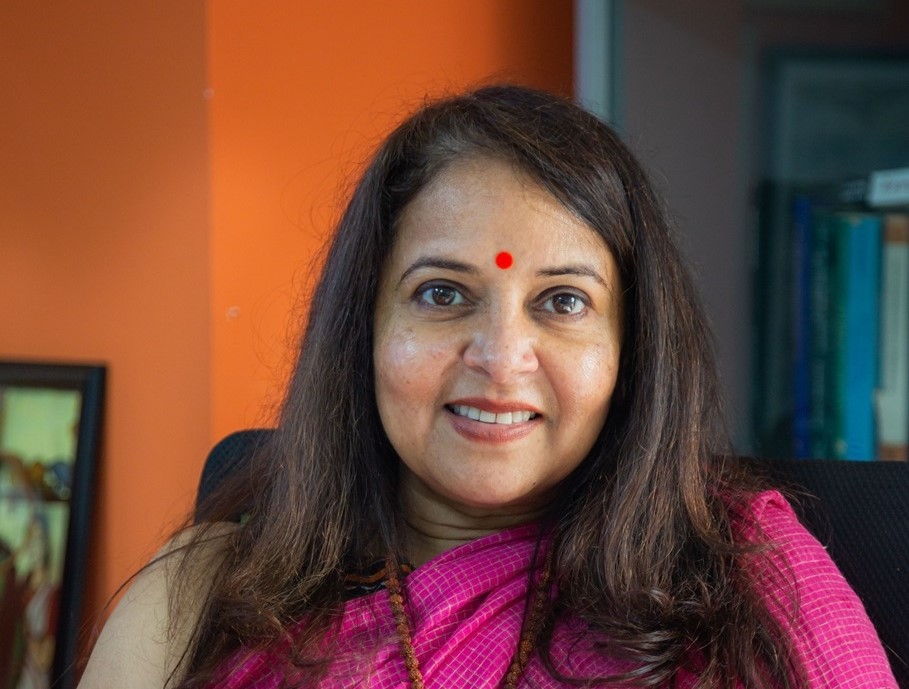
Sabina Faiz Rashid, PhD, is Professor and Mushtaque Chowdhury Chair in Health and Poverty since November 2023, at the BRAC James P Grant School of Public Health, BRAC University, Bangladesh, and served as Dean from 2013–2023.
She joined the School in 2004. She has been teaching and conducting research for over two decades. She is a critical medical anthropologist and her ethnographic research focuses on intersectionality, gender, precarity and health disparities affecting disadvantaged populations.
She has published over 100 plus peer-reviewed articles and book chapters (6,499+ citations; h-index 37), authored 4 books: Discoursing Birthing Care, University Press Limited, 2004 (Bangladesh), Poverty, Gender and Health in the Slums of Bangladesh: Children of Crows (Routledge, UK), and co-editor on the Handbook on Sex, Gender and Health (2025) Springer (Singapore), and recently co-authored Theories of Global Health (2026), (Oxford University Press, UK) textbook for students.
She serves on several national and global advisory boards and committees.
Sabina Faiz Rashid joins the Paris IAS in April 2027 for a one-month writing residency.
Research topics
Precarity, Health ; Gender and Urbanization ; Disadvantaged Populations ; Ethnographies ; Human Rights ; Interrogating Colonial Legacy of Public Health ; Learning from Communities.
What counts as Evidence in Public Health: Who and What gets left out?
Drawing on longitudinal ethnographic research (2020-September 2025) with vulnerable poor young families and adolescents living in Dhaka’s informal settlements, Bangladesh, the research projects will critically examine how poverty, health, and gender are deeply interconnected, thereby challenging dominant frameworks and assumptions rooted in Global North perspectives.
Dhaka, capital city of Bangladesh has the largest number of Informal settlements in the country with an estimated 4 million. Dhaka is projected to become a megacity by 2040, driven by rapid urbanization and the influx of rural migrants seeking jobs in the cities. Globally, it is estimated that over half the world’s population live in settlements in cities, which will rise to 70% by 2050. They are living in crowded places, often very poor and vulnerable, without basic services, with worse health outcomes than the general population.
The project will demonstrate the existing fault-lines in current frameworks in public health, gender and development, which tend to reduce health to simply disease states, with individuals removed from their environments, poverty to fixed economic measures and gender representing only women. The case studies of impoverished young women, men, and their families in Dhaka informal settlements reveal how structural and systemic forces create a cycle of insecurity and precariousness, ranging from marital instability, violence, erratic jobs, arrests, threats and poor health outcomes. This is exacerbated by social, economic, and political exclusion. This is true for most who live in informal settlements in lower middle income country settings.
Evidence from the everyday lives of the chronically marginalized living in Dhaka's settlements reveal the limits of biomedical health models in the context of deep poverty. How do social inequalities and inequities create a cycle of precariousness which cannot be explained by simply economic GDP indicators? We need to move beyond Northern binary categories of gender which focus solely on women. Multiple stressors are embodied as young women and men physically absorb their volatile and uncertain lives, their social and material environments, which manifests into physical illnesses and disease. Health is severely compromised in these contexts.
While many families suffer, their experiences are diverse. Using an intersectional approach, the research project will explore how different forms of violence, from "structural, every day and slow", create layered vulnerabilities for young people and their families. These experiences vary depending on an individual’s gender, age, disability, economic status, social networks and other factors. These nuanced perspectives, grounded in ethnographic and lived realities, are often rendered invisible by dominant biomedical models, global health research, and mainstream policy discussions.
The paper will contribute to advancing Urban Health Theory and Practice from a Global South perspective. To the knowledge, this integration of grounded ethnographic data and drawing on theories of violence and intersectionality is not often applied in public health in Global South contexts.
While this paper focuses on empirical ethnographic data from Bangladesh, the insights can inform collective action to address inequity and improve the lives and well-being of informal settlement residents more broadly.
Key publications
Rashid, S. F. (2024). Poverty, gender and health in the slums of Bangladesh: Children of crows. Routledge
Doi : https://doi.org/10.4324/9781032740614
Ravindran, T. K. S., Sivakami, M., Bhushan, A., Rashid, S. F., & Khan, K. S. (Eds.). (2024). Handbook on sex, gender and health: Perspectives from South Asia. Springer
Doi : https://doi.org/10.1007/978-981-97-2098-9
Luby, S., & Rashid, S. F. (2026). Theories of change in global health. Oxford University Press
|
|
|
|
|
|