
Freedom and Order: The Science of Human Flourishing
  |
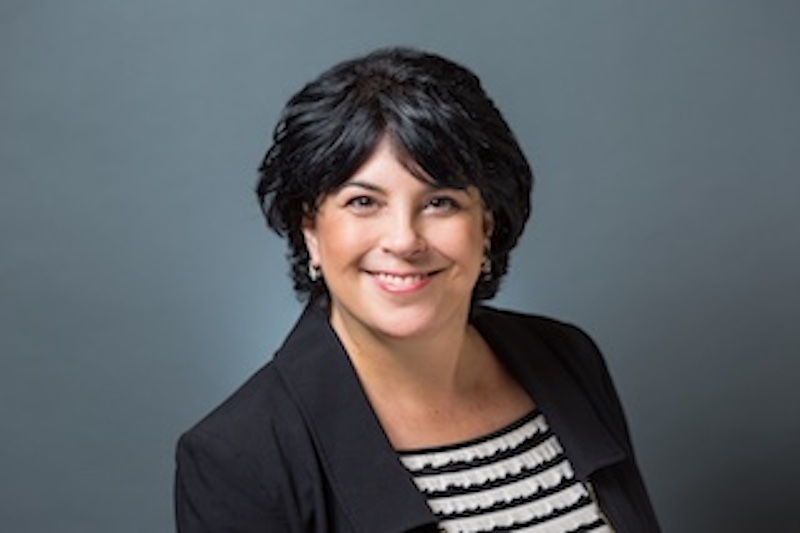
Online conference by Michele Gelfand, Professor of Psychology by Courtesy at Stanford University, the John H. Scully Professor of Cross-Cultural Management and Professor of Organizational Behavior at the Stanford Graduate School of Business and fellow for a one-month writing residency at the Paris IAS in November 2026, as part of the "Paris IdeAS" series.
The "Paris IdeAS" online talk series features short and stimulating presentations from fellows of the Paris Institute for Advanced Study, marking the beginning of 1-month writing residencies.
Online only and in English. Open to the public. Free event but registration required.
Register via the form at the bottom of the page to receive the connection link.
Presentation
For centuries, one of humanity's most fundamental debates has remained stubbornly unresolved: should societies prioritize freedom or order? Philosophers from Plato to Mill, Hobbes to Freud, have argued passionately on both sides. Yet for all the theorizing, remarkably little empirical evidence has been brought to bear on the question.
The answer, it turns out, is both.
Drawing on field studies, laboratory experiments, neuroscience, and computational modeling, she introduces a new framework for understanding how human groups thrive: balancing both tight (order) and loose (freedom) social norms. Groups that are excessively tight — governed by rigid rules, constant surveillance, and severe punishment for deviation — suffer under the weight of constraint. Individual creativity withers, autonomy is crushed, and self-monitoring becomes exhausting. But groups that are excessively loose — with too few rules, too little accountability, and too much latitude — descend into social disorganization, unpredictability, and chaos. Human flourishing, the data show, lives in the balance between the two.
This curvilinear relationship holds with striking consistency across levels of analysis. At the national level, countries at either extreme of tightness-looseness show worse outcomes across a remarkable range of indicators — from happiness and depression rates to cardiovascular disease, life expectancy, GDP per capita, and political instability. The pattern repeats in organizations: companies that become too rigid (United Airlines) or too anarchic (Uber, Tesla) dysfunction in predictable ways, while innovation itself requires a balance of looseness to generate ideas and tightness to implement them. The same logic governs parenting — helicopter control and laissez-faire neglect both produce maladaptive outcomes — and even individual decision-making in finances, consumer behavior, and relationships. Remarkably, the principle extends to neuroscience, where disorders like epilepsy reflect excessive neural synchrony while autism and schizophrenia reflect pathological looseness.
The theory's explanatory power becomes especially striking when applied to contemporary political upheaval. The desire for autocratic leaders — from Putin to Duterte to Trump — is not, she argues, simply a product of nationalism or economic anxiety. It is a predictable response to perceived normlessness and social disorder. When societies swing too loose, citizens hunger for tightness. This phenomenon, which she calls autocratic recidivism, was vividly on display after the Arab Spring, when the overthrow of authoritarian regimes produced not liberal democracy but chaos — and then a renewed appetite for strongmen. The rise of ISIS follows a similar logic.
Understanding this dynamic is not merely academically useful — it is urgent. As migration, artificial intelligence, and inequality accelerate perceptions of disorder worldwide, the conditions for extremism and authoritarian nostalgia are multiplying. The solution is not more freedom or more control, but what she calls tight-loose ambidexterity: the deliberate, evidence-based calibration of social norms for collective well-being.
|
|
 Freedom and Order: The Science of Human Flourishing 01 November 2026 - 30 November 2026 |
|
|