
Beyond Development: Biodiversity conservation and the transformation of eugenics from 'progressive' societal improvement to neo-illiberal techno-engineering
  |
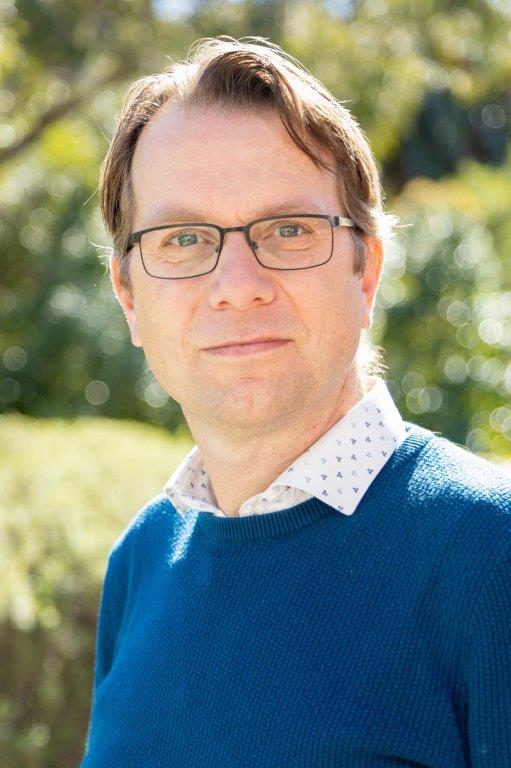
Online conference by Barm Büscher, 2026–2027 fellow at the Paris IAS and professor and director of the "Sociology of Development and Change" research group at Wageningen University and Research, as part of the bi-semester online talk series on environmental philosophy organized by CETE-P.
Presentation
Eugenics, the pseudo-science of the 'improvement' of life, has gone through multiple transformations across its enduring lifespan. Recent literature emphasizes how eugenics is far from a pre-WWII phenomenon: it not only survived the war in 'progressive' forms that accompanied broader development ideas but is more recently making a comeback through new forms of science, technology and neo-illiberal movements and administrations. Related literature also shows how biodiversity conservation has been central to these transformations.
In this paper, we bring these discussions together by reviewing the historical and contemporary connections between biodiversity conservation and the transformations of eugenics from the 19th century to the present. This allows us to add two crucial yet overlooked points that change how we think about conservation more generally.
The first is how conservation, historically and currently, has often functioned as a 'vanguard' domain for experimenting with eugenical ideas and practices. We argue that this comes out most clearly in current forms of techno-driven conservation, which employs familiar social scientific arguments to pursue novel eugenical agendas.
Second and unlike the 19th century, we argue that the current planetary 'polycrisis' moves eugenics from a concern with neoliberal 'improvement' of life to a focus on 'sustaining' certain forms life in the face of increasing disasters and threats of mass extinction. Here, eugenics should no longer primarily be understood as a form of illiberal, racist development, but rather as a form of neo-illiberal, biological 'maintenance'.
Eugenics, in short, is itself becoming a form of conservation.
Organisers
CETE-P is a research centre in the Czech Republic that studies the new ethical challenges posed by the convergence of the growing use of technology and current environmental issues, including climate change, biodiversity loss, issues relating to the Anthropocene, the role of artificial intelligence, and many others. In collaboration with the Turku Centre for Environmental Ethics and the Centre for Ethics at the University of Pardubice, it invites you to a series of online lectures on environmental philosophy, held twice per semester. This lecture series aims to support and promote research and networking in the field of environmental philosophy in Europe.
|
|
 Rethinking capitalist development and its uneven relation to biological diversity in an age of extinction 01 September 2026 - 30 June 2027 |
|
|