
Guilherme Lassance dos Santos Abreu
  |
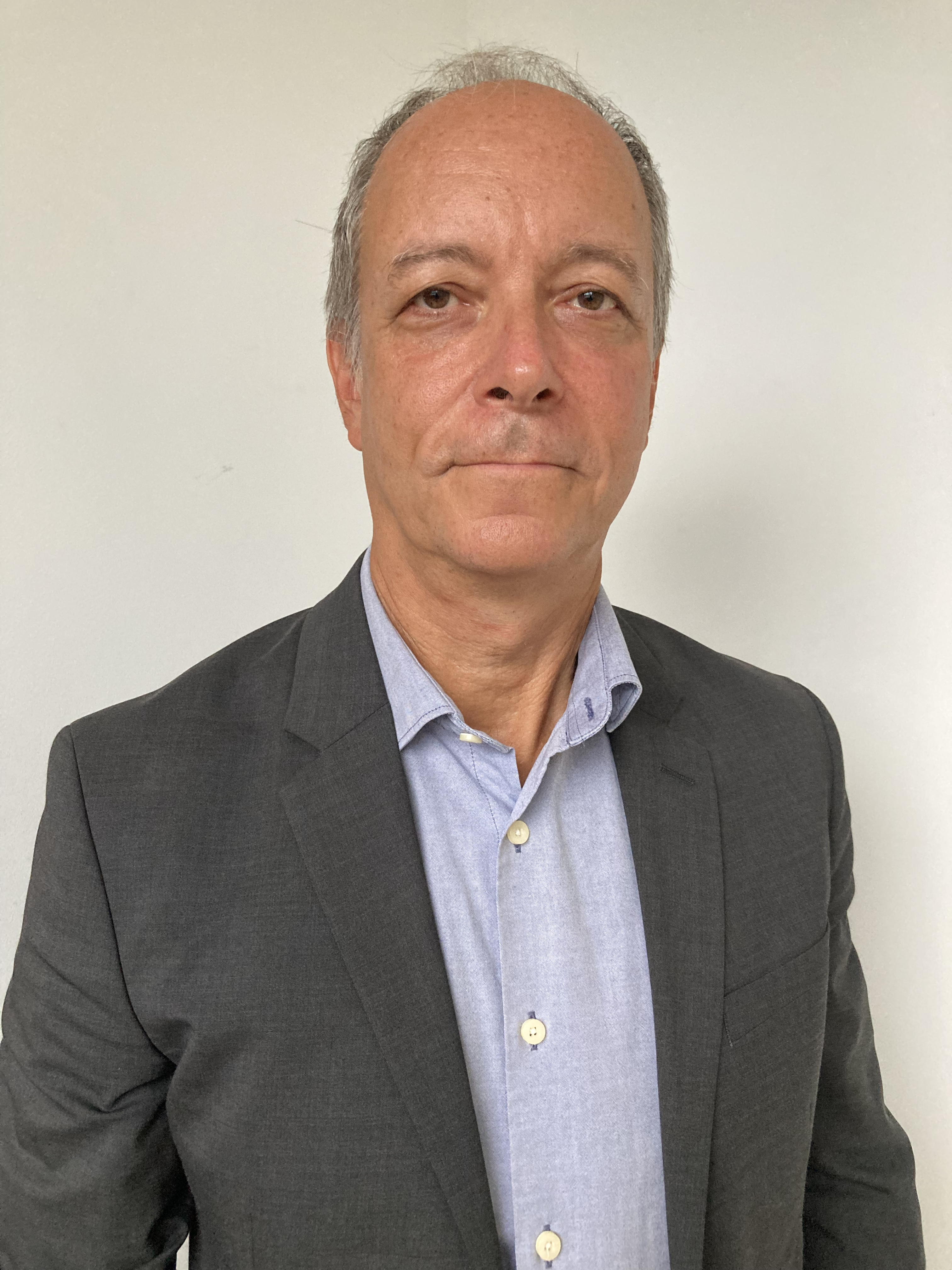
Guilherme Lassance is an architect since 1992 and Doctor in Architecture since 1998. He is Full Professor at the Faculty of Architecture and Urbanism of the Federal University of Rio de Janeiro. He is Director of UrCA (Urbanism, Criticism and Architecture) a research group dedicated to the study of alternative approaches to the contemporary city, with a special focus on the peripheral urbanization of the Global South. He was visiting professor at the Graduate School of Architecture, Planning and Preservation (GSAPP) at Columbia University in New York.
Among his publications, he co-edited the series Readings in Theory of Architecture (2009-2014), is co-author of Metropolitan Rio: guide for an architecture (2013), Post-compact city: drawing out design strategies from Brasilia (2021) and In-Formal: urban infrastructure revisited (2024). In 2024, he joined Plano Coletivo, a group of architects, professors and researchers who collaborate around two common goals: discussing urban territory as a critical narrative and reflecting on architecture as a socio-environmental action. The group was tasked with curating the Brazilian Pavilion at the 19th Venice Architecture Biennale in 2025.
In September 2026, Guilherme Lassance dos Santos Abreu joins the Paris IAS for a ten-month research stay as part of the French Institutes for advanced Study fellowship program - FIAS - co-funded by the European Union’s Horizon 2020 research and innovation programme under the Marie Skłodowska-Curie grant agreement No 945408. His fellowship also benefits from the support of the RFIEA+ LABEX, with a national funding (Grant ANR-11-LABX-0027-01).


Research topics
Design Process and Methodology; Urban Design Theory; Contemporary Architecture; Urban Planning.
Socio-environmental Enhancement of Inherited Infrastructure
This project rethinks urban mobility infrastructures in metropolitan peripheries, where sectoral, utilitarian designs create degraded and socially segregated spaces. Using Paris as a case study, it treats infrastructure as the city’s architecture, aiming to enhance spatial articulation, environmental quality, and social inclusion. Combining field surveys, design workshops, and multi-criteria evaluation, it explores interventions in existing infrastructures, generating a lexicon of architectural and urban concepts.
By focusing on strategic urban gates and peripheral areas, the project transforms infrastructural “non-places” into valued urban spaces that promote walkability, accessibility, and collective heritage. Building on studies of informal infrastructure appropriation, it proposes strategies to democratize urban quality, reduce socio-spatial inequalities, and support climate resilience. Results include a catalog of interventions, conceptual frameworks, and publications to guide future infrastructure design globally.
Key publications
Lassance G. et al., In-Formal. Urban infrastructure revisited. Rio de Janeiro: Rio Books, 643p, 2026
Lassance, G.; et al., Post-compact city. Drawing out design strategies from Brasilia. Rio de Janeiro: Rio Books, 324p, 2021
DOI: 10.1080/02665433.2026.2632698
Lassance, G.; Capille, C. C, Varella P., Metropolitan Rio. Guide for architecture. Rio de Janeiro: Rio Books, v. 1. 288p, 2013
|
|
|
|
|
|