
Lara Lammer
  |
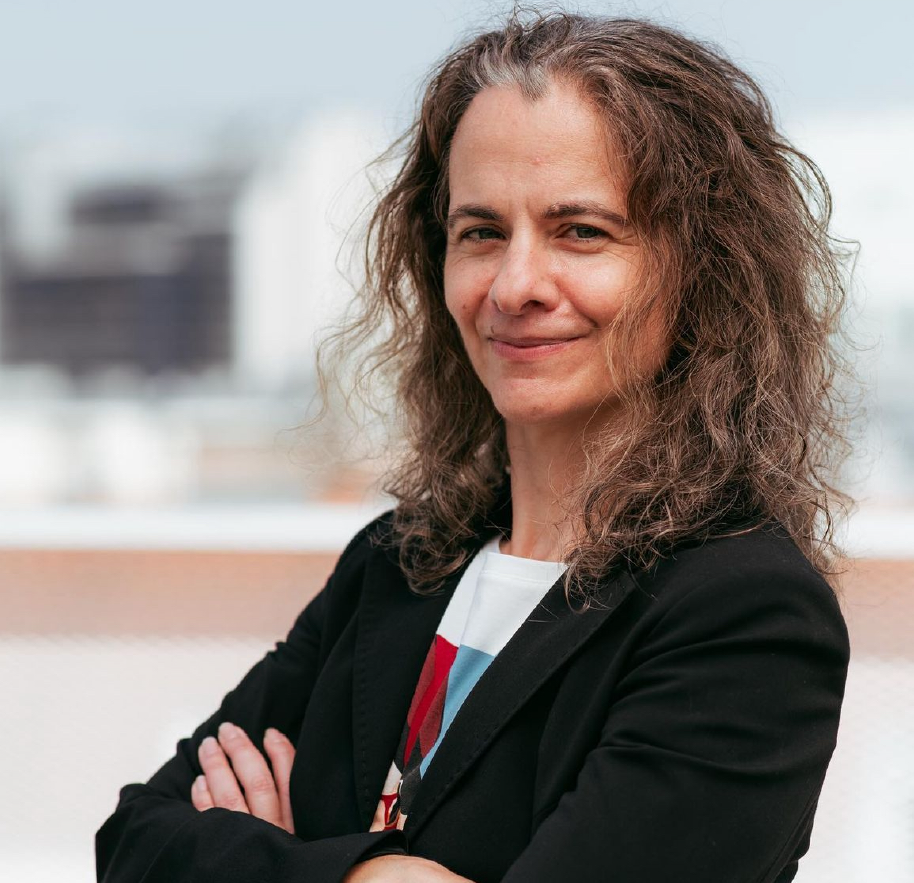
Lara Lammer is a Senior Scientist at Technische Universitat Wien (TU Wien) and Co-Founder and Advisor at Fortis AI. Her work connects research and practice in human-centered sustainable technology development, with a focus on robotics, artificial intelligence, and interdisciplinary innovation.
At TU Wien, she teaches "How to Invent a Robot", a constructionist learning course where students from engineering, architecture, and science work on challenges related to the United Nations Sustainable Development Goals (SDGs).
Her current research examines how high tech environments shape problem framing and decision-making under human, organisational, and systemic uncertainty. Her leadership practice focuses on empowering individuals, especially early-career innovators and women, to navigate the everyday realities of high tech development and step into collaborative roles with greater confidence. At Fortis AI, she translates these ideas into practice, advancing robotics and AI technologies. She is an alumna of the Austrian funding agency FFG Female Innovators program.
Lara Lammer joins the Paris IAS in April 2026 for one-month writing residency.
Research topics
Artificial intelligence; human-centered, sustainable development of AI and robotic systems; interdisciplinary collaboration, problem framing, and decision-making in engineering innovation; constructionist and project-based learning in engineering education.
How to Invent a Robot - Framing and Solving Problems in Engineering-Driven Innovation
Across industry, applied research, and engineering education, recurring patterns appear in how high-tech teams collaborate and decide under pressure. These patterns quietly shape not only what gets built but how problems are framed in the first place. AI-supported tools are increasingly part of these environments, subtly influencing information gathering, comparison, and decision-making.
Drawing on experience in technology development, project management, and university teaching, this project views innovation as both a technical and a social process. It explores how technological possibilities are translated into concrete solutions, how problem definitions evolve during development, and how engineering decisions are made under real-world constraints. In contexts where technological possibilities expand rapidly, responsible innovation depends on the ability to connect engineering choices with human needs, societal impact, and long-term sustainability.
The project reflects on the small routines, conversations, and leadership choices that enable constructive interdisciplinary collaboration. Rather than proposing a new methodology, it distills practice-based insights into how intentionally designed environments make space for reflection within ongoing work. In rapidly evolving technological contexts, sustainable innovation depends less on faster answers and more on the capacity of teams to question assumptions, integrate diverse perspectives, and act thoughtfully amid uncertainty.
Key publications
Jaeggle, G. and Lammer, L. "Teaching Future Engineers through Interdisciplinary Collaboration: A Case Study on Competence Development for Sustainable Innovation". ICL2025: Proceedings of the 28th International Conference on Interactive Collaborative Learning, 2025.
Kasemi, R., Lammer, L., Thalhammer S., and Vincze, M. "EdgeSoil 2.0 – Soil Analyzer Using Convolutional Neural Network and Camera Imaging for Agricultural Robotics." ICRA2024: Proceedings of the IEEE International Conference on Robotics and Automation (ICRA), Yokohama, Japan, 2024, pp. 15825-15831.
Lammer, L., et al. "Mutual care: How older adults react when they should help their care robot." AISB2014: Proceedings of the 3rd international symposium on new frontiers in human–robot interaction. London, UK: Routledge, 2014.
 Online conference by Lara Lammer, Senior Scientist at TU Wien and fellow for a one-month writing residency at the Paris IAS in April 2026, as part of the "Paris IAS Ideas" series. Open to the public, registration required. |
|
|
|
|