
Luis Bettencourt
  |
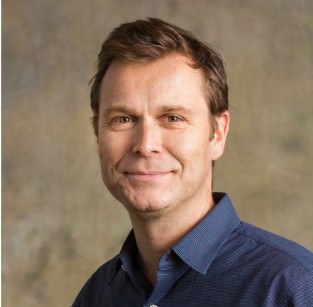
Luis Bettencourt is the Lorna Puttkammer Straus Professor at the University of Chicago. He is faculty at the Department of Ecology and Evolution, the Data Sciences Institute, and the College. He is also Associate Faculty of the Department of Sociology and External Professor at the Santa Fe Institute and the Vienna Complexity Science Hub. He grew up in Lisbon (Portugal) and obtained his undergraduate degree in Engineering Physics from IST Lisbon. He obtained his PhD from Imperial College London in Theoretical Physics and held postdocs and research positions at the University of Heidelberg (Germany), Los Alamos National Laboratory, MIT, and the Santa Fe Institute.
His research focuses on the theory and modeling of complex systems and the processes that underlie the structure and growth of cities, in particular. He connects interdisciplinary concepts and advanced mathematicswith new technologies and data to create new systems’ theory and methods. This work also involves collaborations with governments, NGOs, and interdisciplinary researchers worldwide to co-produce new insights and transformative practices for sustainable development. His work is well-known academically and widely covered in the media. It has helped shape our fundamental understanding of complex systems and human societies and create novel approaches to challenges of urbanization and sustainability.
Luis Bettencourt joins the Paris IAS in June 2027 for a one-month writing residency.
Research subjects
Complex Systems; Sustainable Development; Epistemology; Ecology and Evolution.
Freedom through interdependence: A Humanistic Synthesis of Development in Complex Urban Societies
Modern human societies changed so profoundly that our lives differ fundamentally from our parents’ or grandparents’. These changes brought gains and losses, but also undisputable progress in health, life expectancy, education, and individual agency. All along, a humanistic reckoning of who we are in relation to each other and nature has come into focus, with a reassessment of our global responsibilities, and an expansion of personal identities and rights.
These facts contrast sharply with national concepts of development. Societal development has become central to international policy and national aspirations, as in the UN Sustainable Development Goals. However, national development arose in a troubled postcolonial context, its frameworks remain technocratic, and its metrics contested and unfocused. This has prompted a humanistic critique: Synthesizing societal and individual perspectives has become a major challenge, with important political and economic consequences.
This project reconceptualizes development by integrating the human experience with a critical assessment of existing frameworks. It has three parts: to review the humanistic critique of development; to discuss advances and gaps in bottom-up frameworks, such as the capabilities approach and individual flourishing; and to produce a new synthesis bridging individuals to societies, based on humanistic principles at play in complex urban societies, where individuality and interdependence create complexity and change.
Key publications
L.M.A. Bettencourt, N. Marchio, "Infrastructure deficits and informal settlements in sub-Saharan Africa". Nature 645, 399–406, 2025
DOI: 10.1038/s41586-025-09465-2
L.M.A. Bettencourt, "Introduction to Urban Science: Evidence and theory for cities as complex systems", MIT Press, Cambridge MA, 2021
ISBN: 9780262046008
L. M. A. Bettencourt, "The origins of scaling in cities", Science340, 1438-1441, 2023
DOI: 10.1126/science.1235823
|
|
|
|
|
|