
Martha Maya Calle
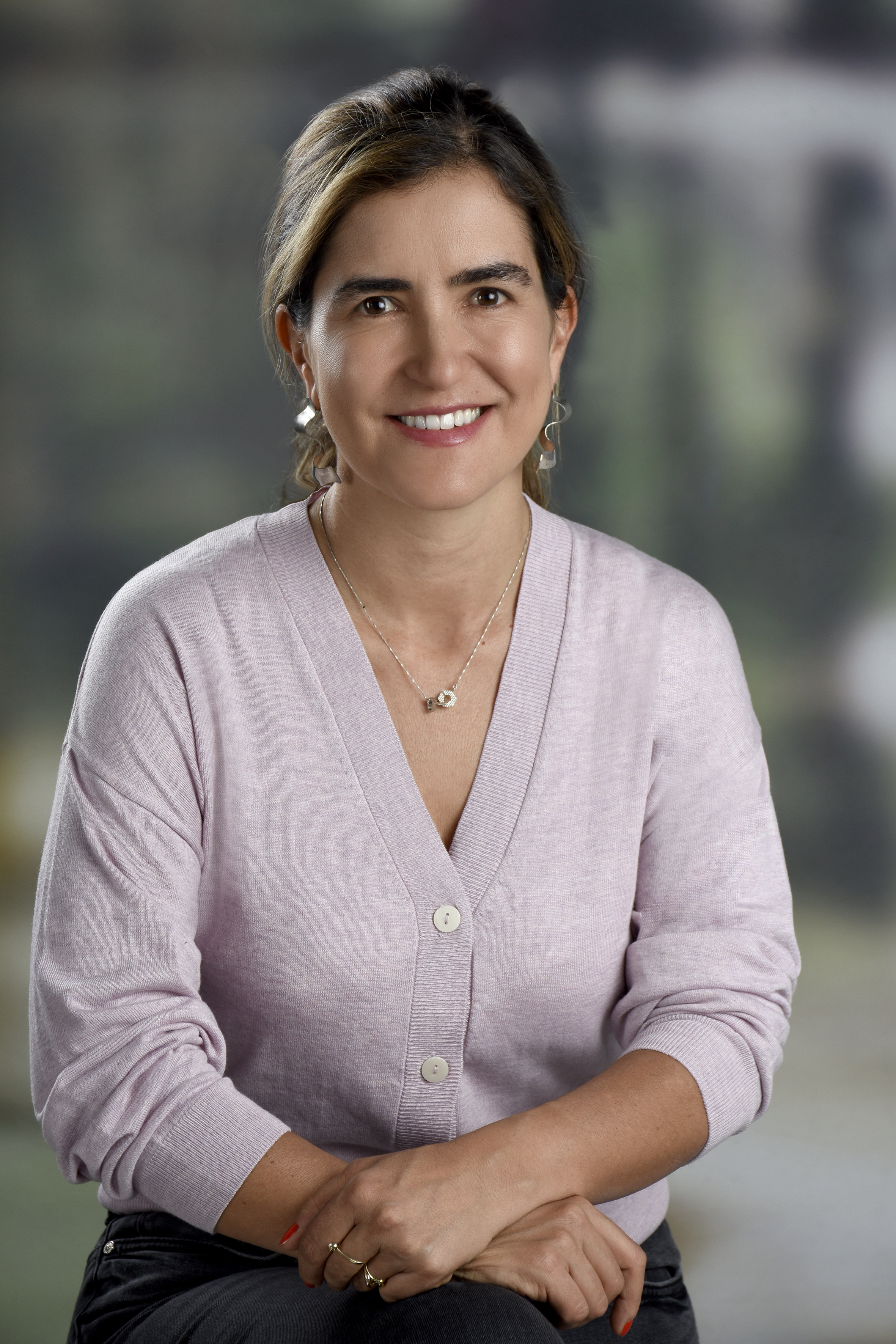
  |
Martha Maya is Deputy Global Director at the Institute for Integrated Transitions (IFIT) and Regional Director for Latin America and the Caribbean. Her work focuses on reducing political polarisation, supporting dialogue in divided societies, and strengthening democratic institutions across the region.
She has nearly two decades of experience in public policy, negotiation, and transitional justice. During the peace negotiations between the Government of Colombia and the FARC, she served as Chief of Staff at the Ministry of Interior and later at the Office of the High Commissioner for Peace, where she acted as liaison in Havana on the agenda item of political participation.
Her career spans government and different sectors of civil society, including organizations working on conflict resolution, peacebuilding, and media. She previously worked with the International Center for Transitional Justice and the Ideas for Peace Foundation (FIP), and earlier collaborated with the media outlet La Silla Vacía. She has also published opinion pieces in The New York Times, El País, and El Tiempo.
She holds a law degree from Universidad de los Andes and a master’s degree in Law and Economics (LL.M / MSc).
Martha Maya Calle joins the Paris IAS in June 2027 for a one-month writing residency.
Research topics
Political Polarization; Dialogue and Negotiation in Divided Societies ; Conflict Resolution and Peacebuilding; Democratic Resilience; Peace Processes and Political Participation; Convening Methodologies; Trust-Building in Political Dialogue; Practice-Based Research.
Framework for Constructive Engagement in Divided Societies: Tools and Process Design Tips
This project develops a framework for constructive engagement in polarized and divided societies. It draws on nearly two decades of practitioner experience convening high-level actors with opposing views in conflict and post-conflict settings across Colombia, Latin America, and other regions.
Building on eight years of work at the Institute for Integrated Transitions (IFIT), as well as earlier experience in government and civil society, the project seeks to translate practitioner knowledge into a structured and evidence-informed methodology for designing effective convening processes in highly sensitive political environments. This work has included facilitating dialogue among actors with deeply opposed positions, supporting constructive engagement during polarized electoral cycles, and convening cross-party leaders able to identify common ground during moments of national crisis.
The residency will combine a review of existing scholarship on polarization, dialogue, and conflict resolution with practitioner insights to identify the principles, design elements, and tools that enable trust-building and productive engagement among adversarial actors. The outcome will be a draft framework outlining conceptual foundations, process design recommendations, and a practical toolkit for stakeholder mapping, facilitation, risk management, and impact assessment.
By bridging practice and research, the project aims to contribute a transferable framework that can inform both academic inquiry and real-world efforts to address the growing systemic challenge of political polarizatio
Key publications
Maya, Martha, Stability without Shortcuts: Overcoming Reductionist Debates on Security in Latin America (original version in Spanish: Seguridad sin atajos ni pretextos: desmontando el debate reduccionista en América Latina), Institute for Integrated Transitions (IFIT), 24p, 2026
DOI: 10.5281/zenodo.19064293
Maya, Martha and Méndez, María Lucía “The Transition Despite and Thanks to Justice and Peace,” in Transitional Justice in Colombia: A Retrospective View, Bogotá: Universidad de La Sabana Press, p45–90, 2023
Maya Calle, Martha and Goebertus Estrada, Juanita, "Judicial Interpretation from the Perspective of Judges in Colombia: Criminal Law Area". Judicial Training Modules Series. Bogotá: Superior Council of the Judiciary, Rodrigo Lara Bonilla Judicial School, 2011
|
|
|
|
|
|