
Ramón Alvarado
  |
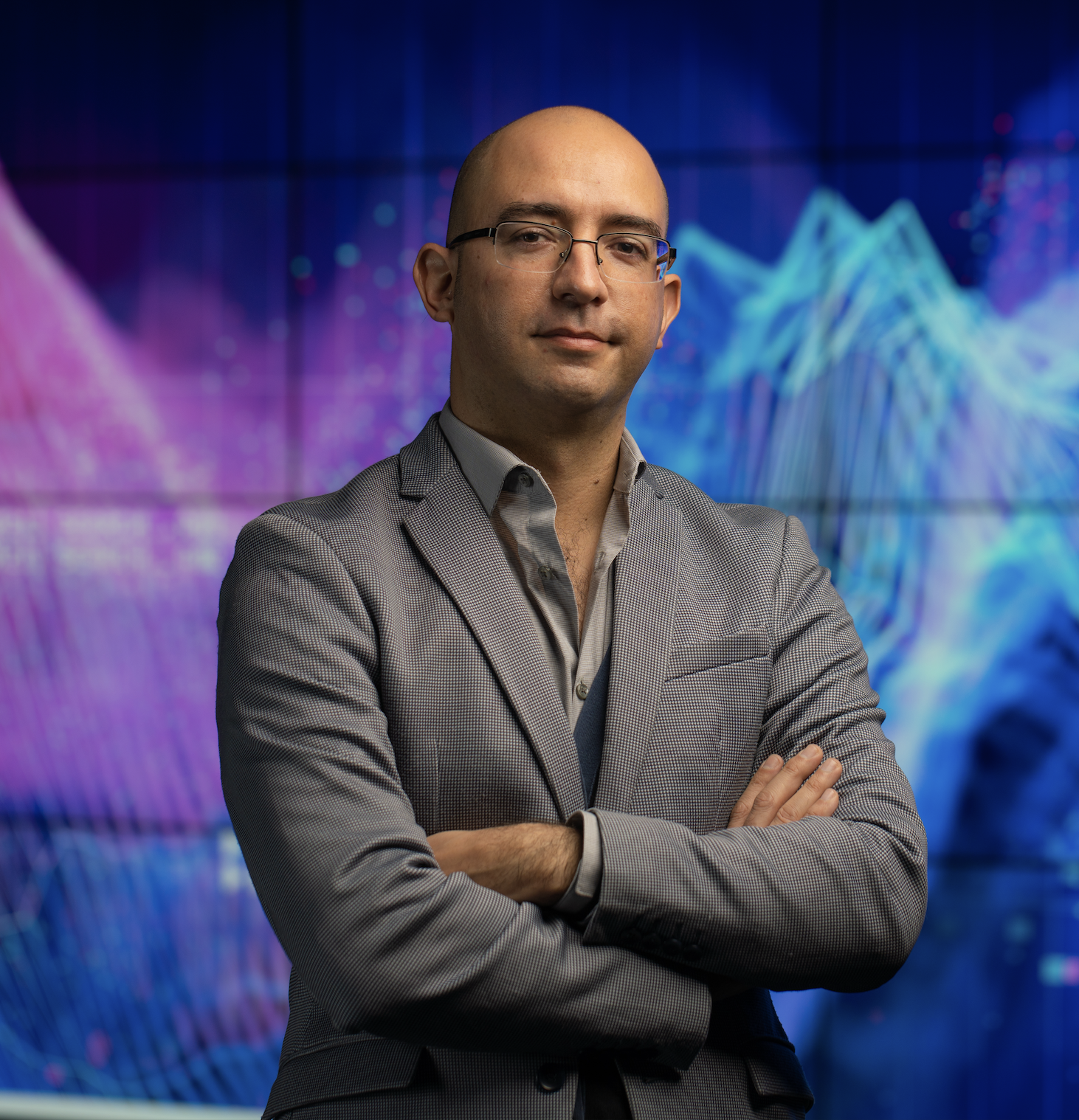
Ramón Alvarado is the President of the International Association for Computing and Philosophy (IACAP), as well as the President of the Association for Philosophy and Computing (APC).
He is an Associate Professor of Philosophy at the University of Oregon and Fellow Researcher for the HumanAID project at Charles University’s Faculty of Social Sciences in Prague. His research is focused on the philosophical implications of the design, development, and use of computational methods such as AI and computer simulations in scientific and social contexts.
In particular, Ramón Alvarado focuses on whether, how, and what kind of knowledge can be created with and by novel technologies such as computer simulations, machine learning, and other artificial intelligence methods— which he calls epistemic technologies. He also explores the ethical implications that follow from the use of these technologies.
Recently, he has also published work on the philosophy of loneliness. This research is part of his recent work on the role of Artificial Intelligence in close personal relationships.
Ramón Alvarado joins the Paris IAS in January 2027 for a one-month writing residency.
Research topics
Epistemology of computational methods ; the limits and uses of AI ; Human's relationship to technology ; philosophy for the 22nd century.
What is Artifactual Epistemology?
Our understanding of knowledge and of the things that partake in its creation have long been modeled after humans and how humans come to know things. More recent developments in epistemology have sought to account for the fact that things other than humans seem to know things and the fact that knowledge-creation is often socially distributed. These developments, however, continue to rely on anthropocentric and biocentric concepts such as intentionality, beliefs, intelligence, or even consensus in their definitions of knowledge.
By contrast, the advent of computational methods has established that technical artifacts play an indispensable part in knowledge-creation in a way that is non-trivially distinct from and even independently of human intervention. They can accomplish epistemic tasks such as analysis, pattern extraction, classification, prediction and inference in an automated manner. Furthermore, these technologies can sometimes accomplish epistemic tasks that no human or living being could. Importantly, they accomplish some of these tasks mechanically and without any of the anthropocentric or biocentric properties of intentionality, beliefs, or intelligence. In short, they have shown that they can partake in knowledge production in unprecedented and non-trivially distinct ways.
Thus, conventional views of knowledge are conceptually inadequate to capture the nature of knowledge, the kinds of things that partake in it, and even knowledge-creation practices. Hence, this project articulates the need for an artifactual epistemology-an epistemology that can account for the way machines produce knowledge with us and for us, whilst demystifying their functionality as artifacts away from conventional anthropocentric or biocentric paradigms.
Key publications
Alvarado, Ramón. (2025). "Artifactual epistemology and environmental intelligence". Harvard Data Science Review, 7(4)
Alvarado, Ramón. (2025). "Challenges for computational reliabilism in AI and other computational methods". In Philosophy of Science for Machine Learning: Core Issues and New Perspectives (pp. 81-106). Cham: Springer Nature Switzerland
Alvarado, R. "AI as an Epistemic Technology". Sci Eng Ethics 29, 32 (2023)
DOI: https://doi.org/10.1007/s11948-023-00451-3
|
|
|
|
|
|