
Ana Paula Cavalcanti Simioni
  |
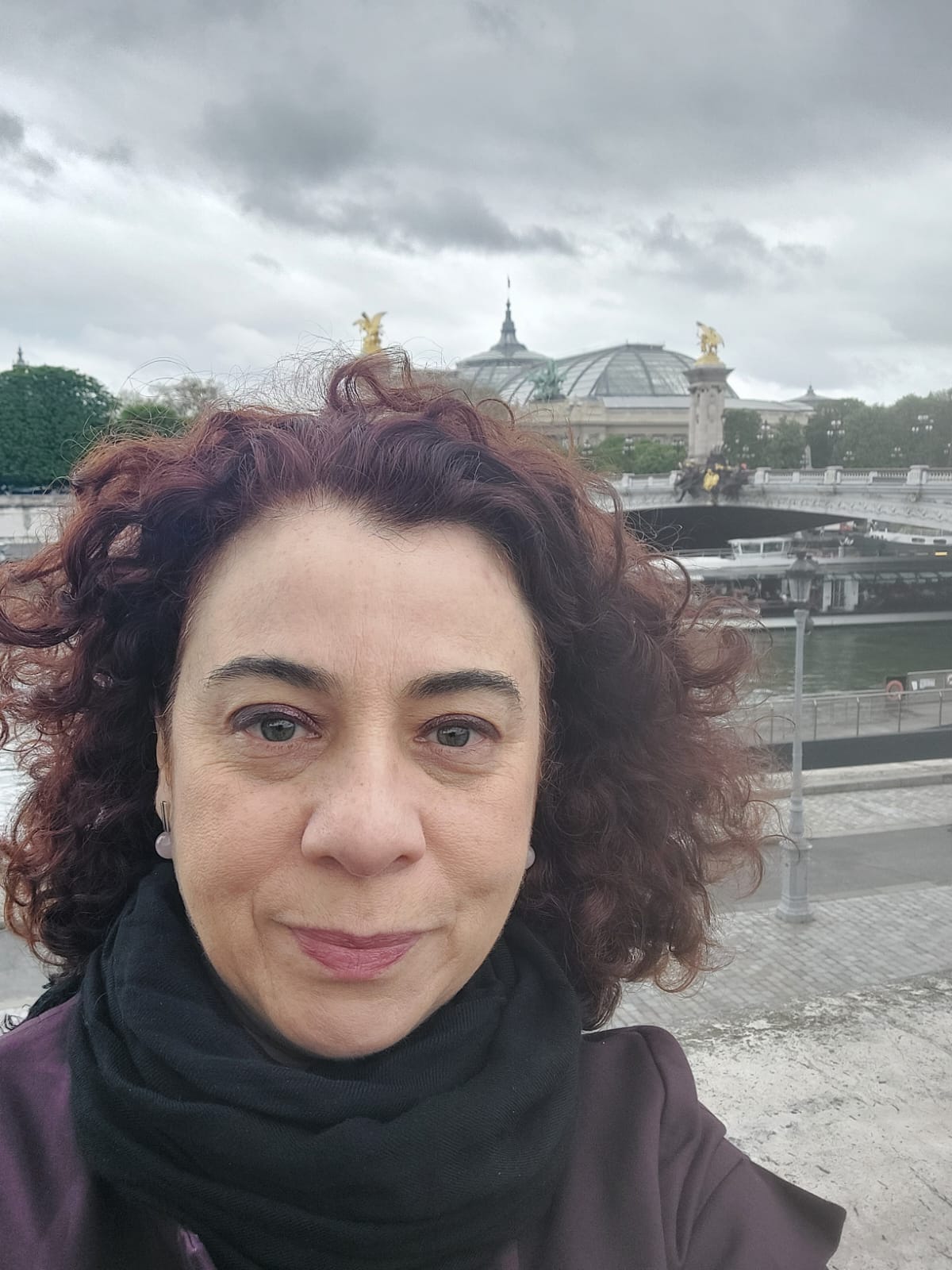
Ana Paula Cavalcanti Simioni an art sociologist and has been a full professor at the University of São Paulo since 2005. Her research focuses on the following topics: gender and art, transfers of artistic models, relationships between artistic centers and peripheries, women artists in Brazil and Latin America (19th-21st centuries). She is part of the Hermes/Matrimoines project, coordinated by the Université Sorbonne Nouvelle, which is dedicated to understanding the complex central role that the digital world plays in the processes of making narratives about female heritage visible and invisible. In addition to being a professor and researcher, she is also a curator of exhibitions dedicated to Brazilian women artists.
Ana Paula will join the Paris IAS in June 2026 for a one-month writing residency as part of the Hermes/ Matrimoines project, led by Université Sorbonne Nouvelle.



Topics of research
Sociology of art; women artists; women's heritage; collections; Brazilian artists.
The Contemporary Art System and Its Mediators: Women Gallery Owners in Brazil (1947–2000)
This project is part of the debates in the sociology of contemporary art (Howard Becker, Pierre Bourdieu, Raymond Moulin, Nathalie Heinich, S. Sofio, etc.), which highlight the importance of the network of agents necessary for the production of the art world beyond the artists, who are usually more valued and studied. Between artists and the public, various mediators (such as curators, gallery owners, museum directors, collectors, critics, etc.) carry out activities crucial to the production of art, understood as a collective endeavor. Thus, this study aims to contribute to the history of a much-neglected group of mediators: art galleries and their female owners. In the 1970s, the golden age of the art market’s development in Brazil, it is estimated that 70% of São Paulo’s galleries were run by women (Durand, 2009). This data is even more interesting when contextualized, as it occurred during a period marked by strong political authoritarianism and restrictions on civil activities, including those of feminist groups, due to the Military Coup (1964–1985).
However, most of these galleries and their owners are unknown today; few have been studied, and the collections of these institutions are generally not institutionalized. Documenting, historicizing, and analyzing the trajectory of women gallery owners in Brazil in the second half of the 20th century is thus relevant for understanding the history of the Brazilian art system, from a perspective grounded in both the sociology of art and gender studies. This research is part of a collaborative project with France (HERMES/MATRIMOINES) led by the Université Sorbonne Nouvelle, which is dedicated to the study of invisible female heritage.
Publications clés
Simioni, Ana Paula C. Des artistes latino-américains au Centre national des arts plastiques : les présences invisibles. MUSÉES. Anais Museu Paulista, 32, 2024
DOI: 10.11606/1982-02672024v32e1
Simioni, Ana Paula C. Latin American artists in modernist Paris: a difficult consecration. Anais do Museu Paulista, v. 29, p. 1-39, 2021.
DOI: 10.1590/1982-02672021v29e17
Simioni, Ana Paula C. “Le modernisme brèsilien, entre consécration et contestation”. Perspective. Revue de l´INHA, Paris, v. 2013-2, p. 325-342, 2013.
Learn more
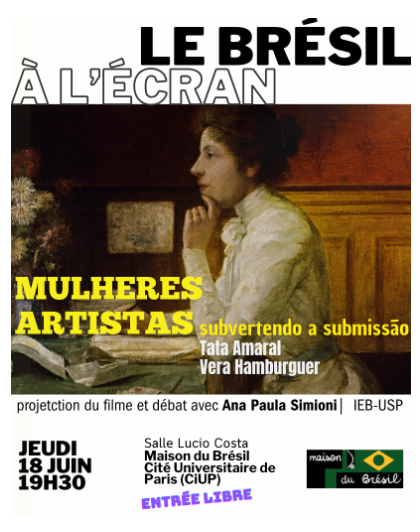 Projection of the documentary by Tata Amaral and Vera Hamburger followed by a discussion with Professor Ana Paula Simioni (Paris IAS, IEB-USP) and moderated by Camila Gui Rosatti (CRBC–EHESS). Open to the public.  Online conference by Ana Paula Cavalcanti Simioni, Full Professor at the University of São Paulo, and fellow for a one-month writing residency as part of the "Paris IAS Ideas" series. Open to the public. |
|
|
|
|