
William Brent Seales
  |
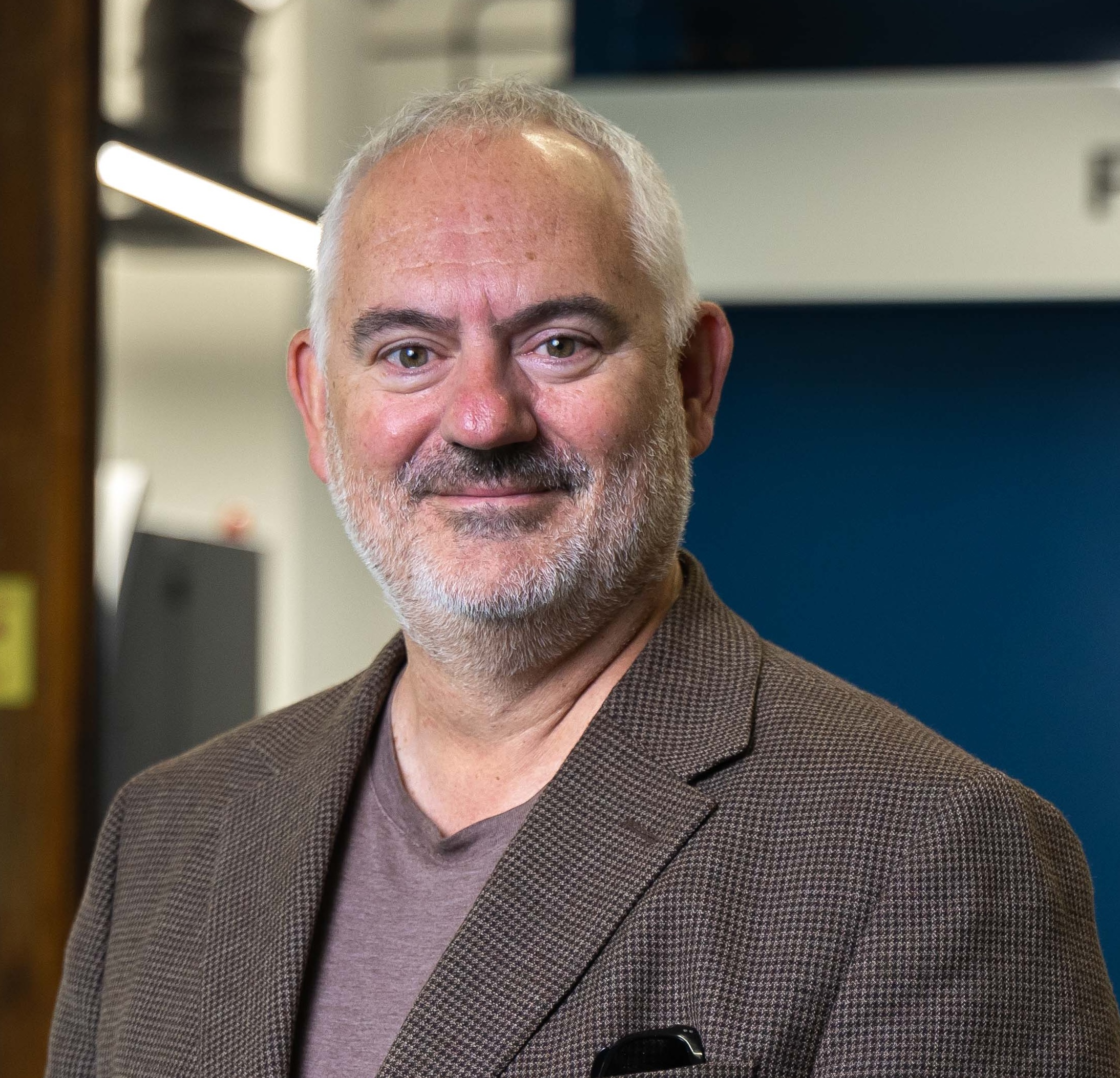
William Brent Seales is the Stanley and Karen Pigman Chair of Heritage Science and Professor of Computer Science at the University of Kentucky. He earned a Ph.D. in Computer Science at the University of Wisconsin-Madison and has held research positions at INRIA Sophia-Antipolis, UNC Chapel Hill, Google (Paris), and the Getty Conservation Institute. The Heritage Science research lab (EduceLab) founded by him-self at the University of Kentucky applies techniques in machine learning and data science to the digital restoration of damaged materials. The research program is funded by the National Science Foundation, the National Endowment for the Humanities, the Arts and Humanities Research Council of Great Britain, the Andrew W. Mellon Foundation, Schmidt Sciences, and Google.
William Brent Seales is a co-founder of the Vesuvius Challenge, an international contest formed around the goal of the virtual unwrapping of Herculaneum scrolls. He continues to work with challenging, damaged material (Herculaneum Scrolls, Dead Sea Scrolls), with notable successes in the scroll from En-Gedi (Leviticus), the Morgan MS M.910 (The Acts of the Apostles), and PHerc.Paris.3 and 4 (Philodemus / Epicureanism). The recovery of readable text from still-unopened material has been hailed worldwide as an astonishing achievement fueled by open scholarship, interdisciplinary collaboration, and extraordinary leadership generosity.
He joins the Paris IAS in October 2026 for one-month as part of the "Distinguished Fellowship program" developed in collaboration with PostGenAI@Paris cluster, led by Sorbonne University. Based in the heart of Paris, this interdisciplinary and cross-sector consortium aims to promote ethical, inclusive and sovereign AI that is fully rooted in the major challenges of our time.
The Paris IAS welcomes international researchers to support them in their research on artificial intelligence, its consequences for our societies and the prospects it offers for the future.
Research topics
Large scale analysis of cultural heritage collections using new methodologies; infrastructure for heritage science; storytelling, media, and visualization of complex digital objects.
AI for the Restoration and Analysis of Cultural Material
The project at PostGenAI@Paris will focus on the application of AI to challenges in heritage science. Cultural and societal values are deeply embedded in the artifacts that embody the breadth and scope of the human experience. Thus, the impact of AI in this realm promises to offer immense societal impacts, from greater understanding of humanity’s common heritage to increased appreciation for the range and impact of human experience.
However, two significant gaps currently create barriers to full understanding of cultural heritage objects and artifacts. The restoration gap is the distance between what is lost in a damaged object and what can be restored. The contextualization gap represents the holes in understanding about an object’s context due to fragmented, disconnected information—historical, scholarly, material, and digital—that obscures a holistic view of that object’s life and meaning in relation to the broader landscape of cultural artifacts.
This project, premised on earlier experiences in digital restoration, will develop a variety of computational approaches, including analytical and generative AI methods, that narrow these gaps. The use of AI to answer challenging questions in the humanities remains a nascent field, and the application of AI tools to humanity’s most venerated heritage objects has introduced a third gap—AI explainability—that touches on age-old issues, such as provenance and authenticity. The PostGenAI@Paris program affords the opportunity to develop innovative analytical, generative, and explainable AI methods, which will narrow these gaps further and will engender AI explainability.
Key publications
S. Parsons, C.S. Parker, C. Chapman, M. Hayashida, W.B. Seales, “EduceLab-Scrolls: Verifiable Recovery of Text from Herculaneum Papyri using X-ray CT”, arXiv preprint arXiv:2304.02084, 2023
DOI: 10.48550/arXiv.2304.02084
C. Parker, S. Parsons, J. Bandy, C. Chapman, F. Coppens, and W. B. Seales, “From Invisibility to Readability: Recovering the Ink of Herculaneum,” Public Library of Science (PLoS) ONE 14(5): e0215775, 2019
DOI: 10.1371/journal.pone.0215775
W. B. Seales, C. Parker, M. Segal, E. Tov, P. Shor, and Y. Porath, “From damage to discovery via virtual unwrapping: Reading the scroll from En-Gedi”, Science Advances, Vol 21, e1601247, 2016
DOI: 10.1126/sciadv.1601247
 Online conference by William Brent Seales, Professor at the University of Kentucky, and fellow for a one-month writing residency at the Paris IAS, with the PostGenAI@Paris cluster as part of the "Paris IdeAS" series. Open to the public under registration. |
|
|
|
|